Marco Benvenuti, MMH ‘05
The Story
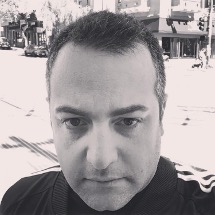
We are saddened to learn Marco passed away on August 27 after a courageous battle with cancer.
A Life of Passion, Tenacity, and Possibility
Even next to the most eccentric entrepreneurs, Marco Benvenuti was an outlier.
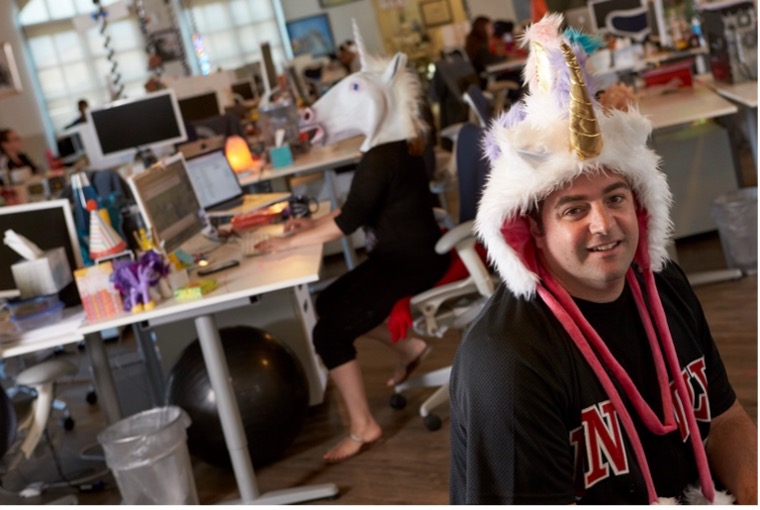
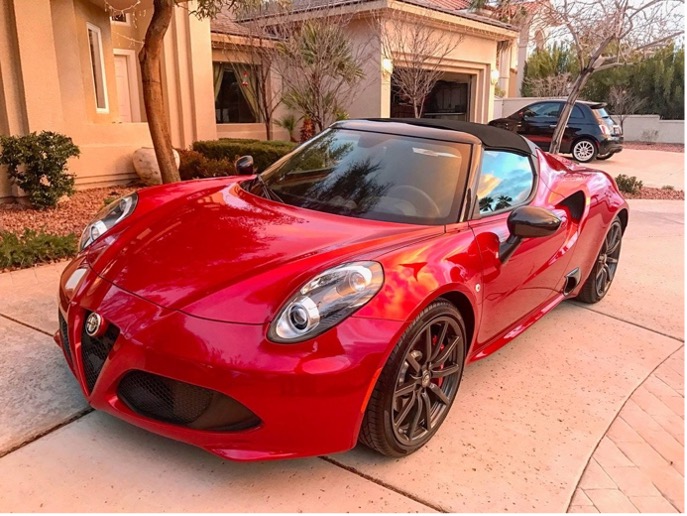
He was the guy in the red poncho in a sea of suits, darting nimbly between disparate worlds—basketball, musical theater, technology, hospitality, and writing code. He was the bull in the China shop—only this bull was driving an Alfa Romeo.
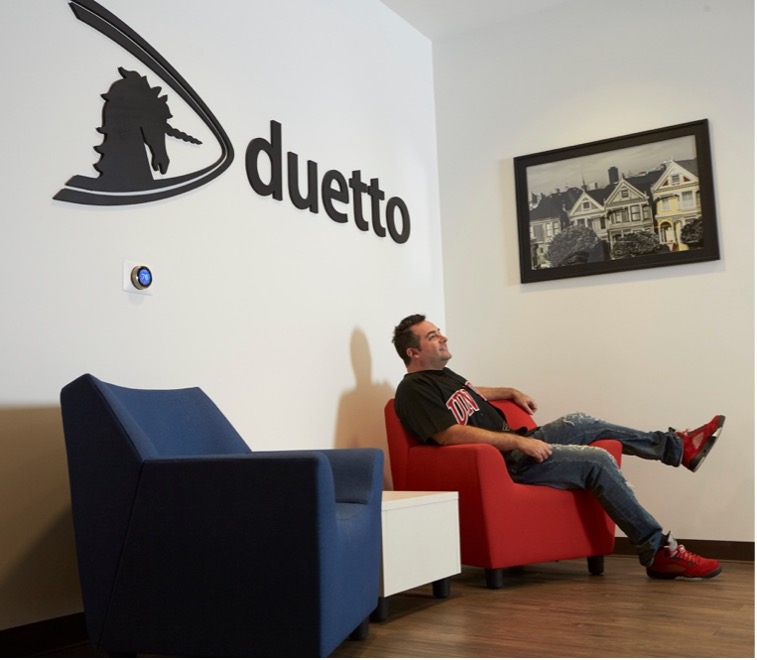
But his showmanship could be deceiving.
“To do what I’ve done, you have to be obsessively committed to not failing,” Marco once said, reflecting on Duetto, the company he co-founded with Patrick Bosworth in 2010. It started as a consulting company working with spreadsheets to support hotels in optimizing profits and grew into a software company 8 years later aided by an $80m Series D funding led by Warburg Pincus – the largest ever non-acquisition investment in hotel software. “People make the mistake of thinking that I don’t take things seriously.”
In fact, few things mattered more to Marco than doing things well, pursuing his convictions, and refusing to let fear or conventional wisdom decide what was possible.
Marco grew up in Livorno, Tuscany, Italy, where his father was mayor. In 1999, he came to the United States to experience a different lifestyle, learn English, and build a future for himself.
As an international student, he had no access to scholarships or discounted tuition and could not afford the California universities he had initially considered. UNLV, however, was within reach. With the support of a professor and fellow Italian Valentino Luciani, Marco discovered the Hotel College and graduated from both the William F. Harrah College of Hospitality and the Honors College in just two years, summa cum laude, in 2002.
UNLV became, as Marco often called it, his “launch pad.”
It was also where he discovered the field that would define his professional career: revenue management. Michael Dalbor, one of his finance professors at UNLV, introduced him to the concept of hotel room pricing. When Marco told him he wanted to learn more about this for his honors thesis, Dalbor suggested that he interview revenue managers working on the Las Vegas Strip, which he did. “Once I did that, I knew revenue management was going to change the future [of hotel pricing].”
Stuart Mann, the dean of the hospitality college at UNLV, later suggested that Marco earn a master’s degree in hospitality from Cornell University. At Cornell, Marco’s advisor was Dr. Sherri Kimes and he was also her TA. The other professor who had the greatest influence on him was Dr. Bill Carroll.
After his first year in the MMH program, he landed a summer job with Expedia in Las Vegas. Expedia was his dream company, so when it offered him a full-time position nine months before graduation, he was thrilled. However, the salary was low. Dr. Kimes pointed out that a company making an offer nine months before graduation clearly saw something special in him. Marco initially resisted asking for more. He was so excited about the opportunity that the salary seemed almost beside the point.
But he listened, thought about it, and agreed to ask for at least $5,000 more.
Not surprisingly, Expedia immediately said yes.
Dr. Kimes has told that story many times over the years, although never using Marco’s name. It was a wonderful example of personal revenue management, but also of Marco himself: enthusiastic, thoughtful, open to advice, and more valuable than he initially realized.
“Having amplified his expertise with a Cornell master’s degree, Marco returned to Las Vegas to hone his skills in what is arguably the largest hotel room market in the world,” said Mark Birtha, President of Hard Rock Hotel and Casino Sacramento, a fellow Las Vegas and Cornell alum. “He was able to harness the potential of this incredible laboratory of Vegas Strip hotel supply and blend some ‘Marco magic’ of innovation and a wild west spirit to develop a heightened way to yield manage.”
Marco became convinced that the traditional approach to hotel pricing was fundamentally flawed. Specifically, hotels relied heavily on the Best Available Rate, or BAR to set rates for a hotel room. This was the base price from which other predetermined discounts were calculated. If the BAR increased, the other rates moved with it. And vice versa.
Marco saw a problem. Demand is not the same for every product a hotel sells.
Demand for a suite may differ from demand for a standard room. Business travelers may behave differently from leisure travelers. Direct-booking customers may have different economics from those booking through an OTA. And demand can vary dramatically from one date to another.
Why, Marco asked, should all these opportunities be tied to a single base price?
His idea can be illustrated with a simple grocery-store analogy. Imagine a supermarket selling basic coffee for $5, premium coffee for $8, and specialty coffee for $15. If demand for the specialty coffee suddenly rises, the supermarket does not need to raise the price of all three products. It can price each one according to its own demand and customers.
Marco believed hotels should be able to do the same.
Betting on Open Pricing
Rather than tying rates together in a fixed pricing ladder, Open Pricing allows hotels to price individual room types, market segments, distribution channels, and dates independently, based on the demand associated with each. Open Pricing was launched in 2014 and for the first time hotels could price every segment, every channel, and every room type independently. It was a new way of thinking about revenue.
The innovation was not simply dynamic pricing; hotels were already changing prices in response to demand. The deeper innovation was breaking the traditional relationship between rates and price tiers so that each pricing opportunity could respond independently. In effect, Marco’s idea moved hotel revenue management from a rigid pricing ladder toward a more flexible, demand-led model.
But corporate America was never quite the right fit for Marco. He was not interested in simply succeeding within an existing system. He wanted to change the system.
“I came in like a bulldozer and broke rules,” he said. “They [corporate America] tell you to tone it down and they want to ‘own’ all your time and tell you how to think. But I would never allow myself to be a slave to a job, never let someone own my time, and never let others tell me how to think and act.”
Many people in the industry doubted Marco’s vision and the concept of Open Pricing. Some academics, including some associated with Cornell, published papers, and spoke at conferences questioning and trying to debunk Open Pricing. Marco and Patrick persisted. They believed the data supported their idea, and they were willing to fight for it.
NH Hotels and Meliá Hotels became among Duetto’s first major clients. Those relationships helped prove what Marco already believed: Open Pricing could fundamentally change the economics of hotel revenue management.
Eventually, the equity markets validated what Marco and Patrick created. Duetto was sold for many millions of dollars in 2024 to the private equity firm GrowthCurve (https://www.growthcurvecapital.com/rve Capital) . The concept that had once seemed radical became increasingly accepted across the industry, with competitors developing their own versions of Open Pricing.
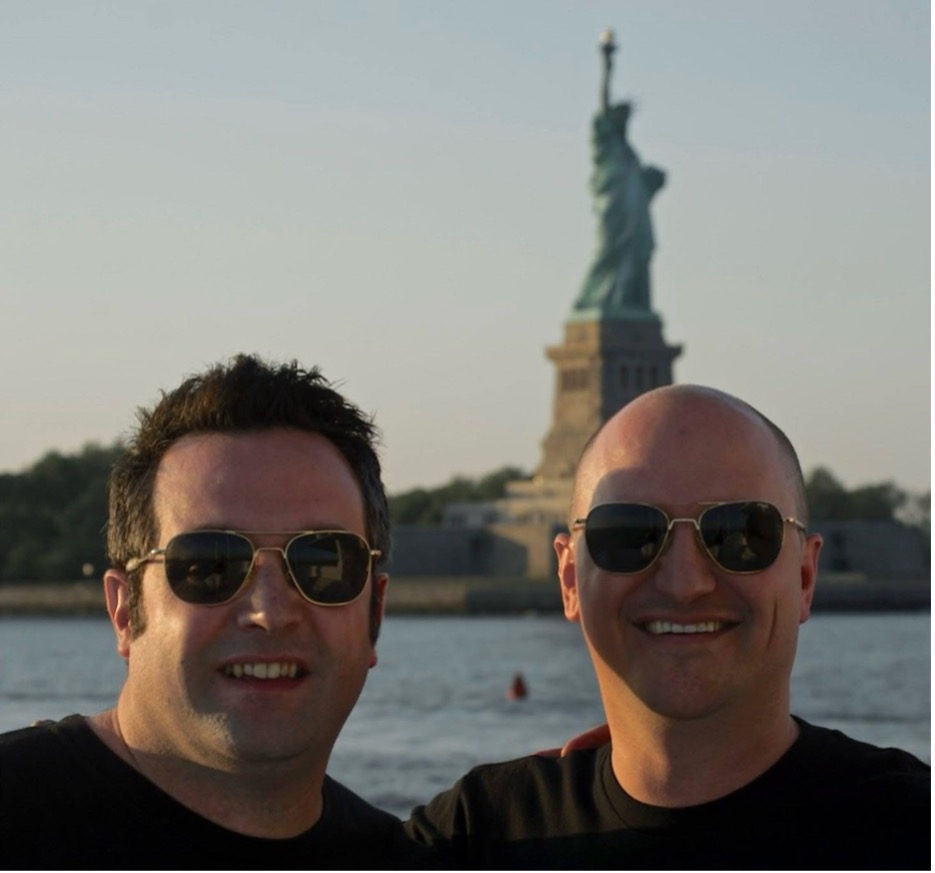
Marco with Patrick on Lee Pillsbury’s Double Eagle in the New York Harbor.
But creating Duetto was only one part of Marco’s legacy.
The Relentless Pursuit of Possibility
Marco’s defining characteristic was not simply intelligence. It was tenacity. He left no stone unturned when pursuing a goal. He was endlessly curious, willing to learn something completely new, and prepared to work until he mastered it.
His love for the Vegas Golden Knights offers a perfect example. Marco was an intensely passionate fan. He even commissioned a solid-gold VGK medallion that he wore to games.
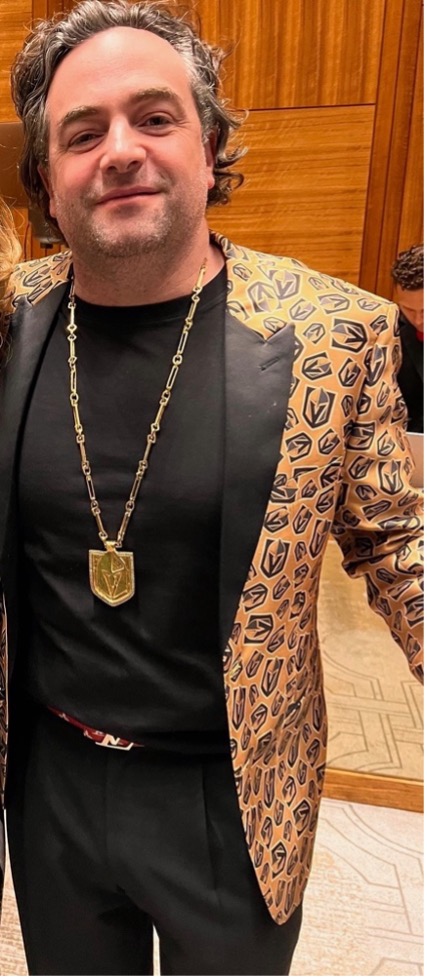
Marco in VGK Outfit.
Then, at around age 45, he decided that being a fan was not enough. He wanted to play ice hockey. So, he hired a skating coach. He practiced. He worked at it. And eventually, he earned his place on a local men’s hockey team.
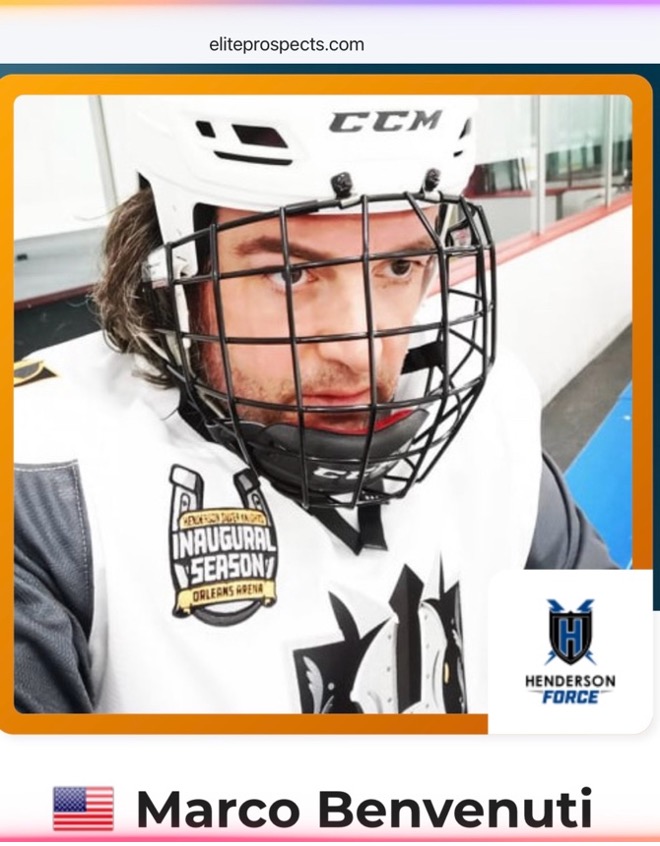
Marco’s approach was always the same: identify something you want to do, find the right people to help you, work relentlessly, and refuse to assume that your age, circumstances, or other people’s expectations define what you can accomplish.
He believed that hard work, dedication, curiosity, and the willingness to hire the right people could make anything possible.
Giving Back
Despite his extraordinary professional achievements, Marco measured success in a way that went far beyond money or titles. He believed deeply in education and in giving people the tools and confidence to create their own futures. He stayed connected to both the Harrah College of Hospitality at UNLV and Cornell’s Nolan School of Hotel Administration — speaking to students and helping them see possibilities they might not otherwise have considered. At Cornell, he was especially proud to become a member of the Cornell Hotelie Hall of Fame and treasured his time at Cornell, first as an MMH graduate student, and later as an executive in residence in Statler Hall at the Nolan School of Hotel Administration.
Marco also gave generously. He donated $1 million to the UNLV Harrah College of Hospitality, creating an endowment designed to support students and improve retention and success. He believed strongly in the value of studying abroad, moving outside one’s comfort zone, and developing an international perspective.
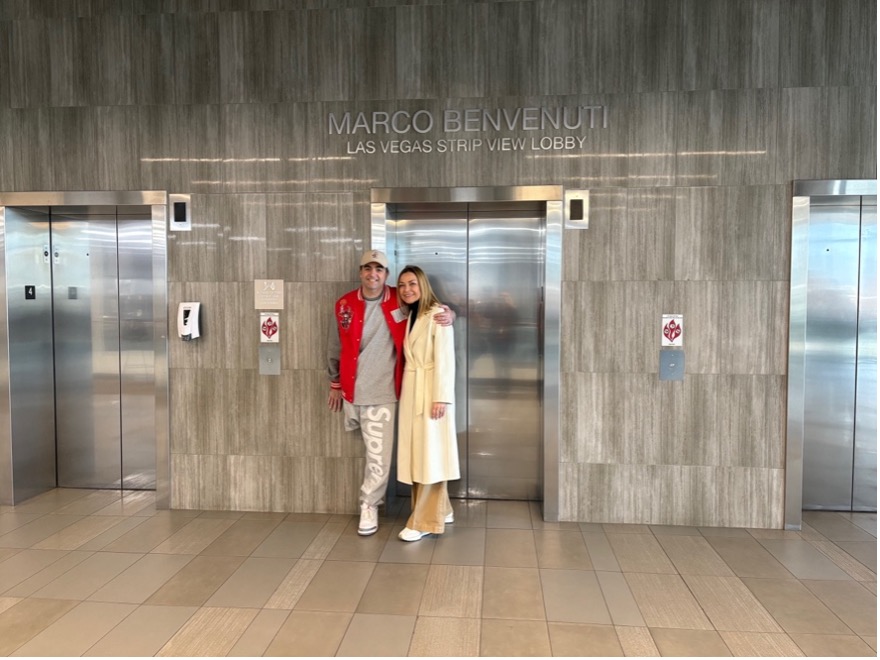
Marco with his childhood friend in the Marco Benevenuti Strip View Lobby in Hospitality Hall at UNLV
His philosophy of giving was beautifully simple:
“Success for me is to give a student the tools they need to achieve what they want in the workforce. They should have the knowledge and confidence to follow the path that will make them happy in whatever job they choose.”
Coming Home Through Sport
In the later chapter of his career, Marco turned his attention increasingly toward another lifelong passion: sports. He believed sports had the power to lift the human spirit. Sports could bring people together, improve mental health and well-being, connect generations, and give entire communities a shared identity. For Marco, this was particularly true in Europe. “Europeans are extremely emotional about their teams,” he said.
His parents took him to basketball games, and from an early age, the sport became woven into his identity. He dreamed of one day becoming president of his hometown team, Libertas Livorno. At the time, it was simply the dream of a 10-year-old boy sitting courtside with his mother and father.
After selling Duetto, Marco became a major investor, president, and majority owner of Libertas Livorno – the basketball team he watched with his parents. He also bought the city’s women’s basketball team.
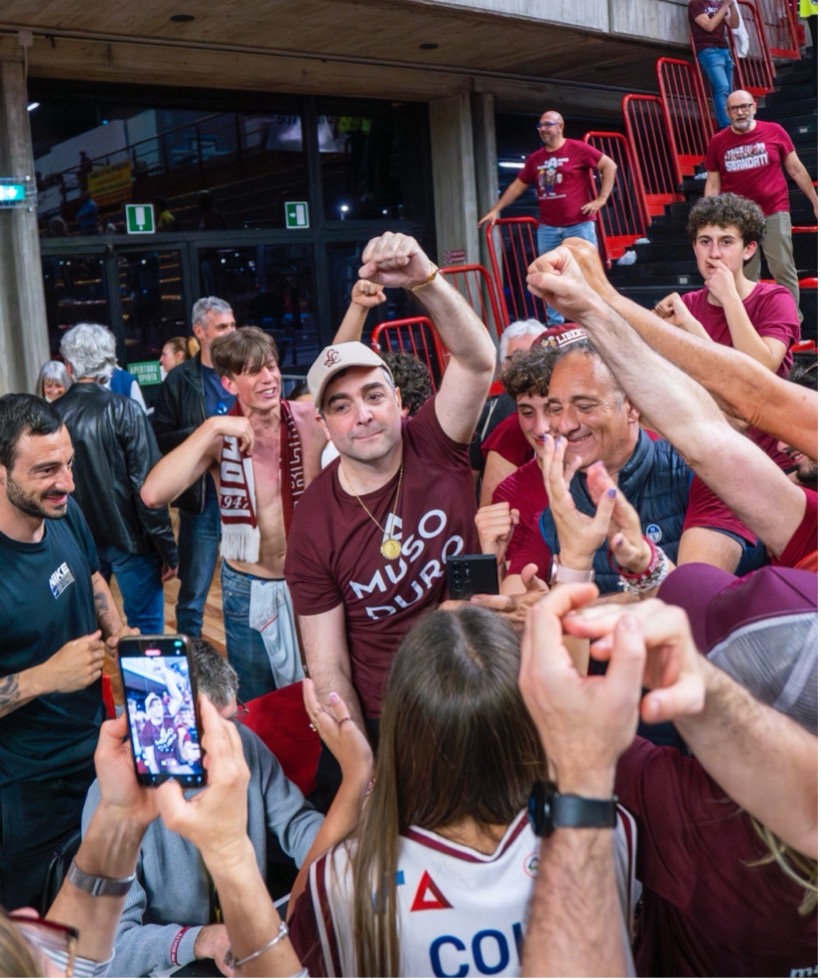
Marco with fans at Libertas basketball game.
His goal was not merely to own teams. He wanted to provide the financial resources, leadership, and organizational structure necessary to build sustainable programs capable of eventually reaching Italy’s top division.
In doing so, Marco helped unite the citizens of his hometown through the sport he had loved since childhood. When Libertas won a crucial playoff series, a fan told him that his son had said, “Dad, in all my life I’ve never seen you this happy!” The comment captured something essential about Marco. For all his accomplishments in business, some of his deepest happiness came from helping other people experience joy.
The city of Livorno eventually honored him with a key to the city. Basketball fans chanted his name— “Marco! Marco!”—at games, both home and away.
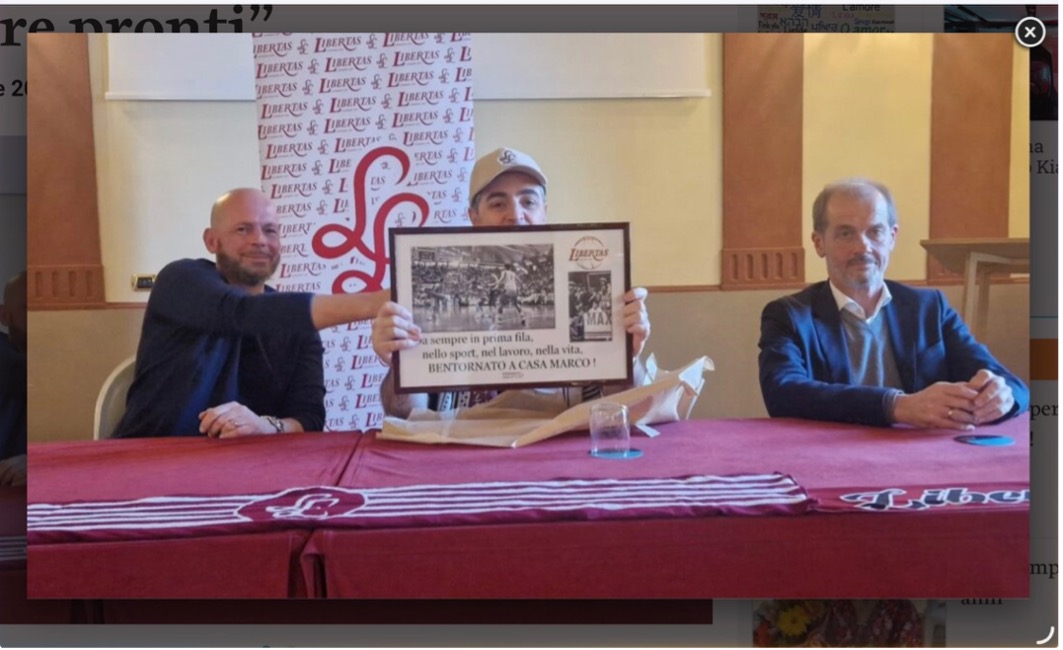
Marco with Libertas executives and article from paper when he was a little boy.
The Legacy of Marco Benvenuti
It would be easy to define his legacy by his professional accomplishments. He helped create Open Pricing. He co-founded Duetto with Patrick Bosworth that became a global technology company that helped revolutionize hotel revenue management, and he transformed sports organizations in his hometown.
But these accomplishments, impressive as they are, represent only part of who Marco was.
His greater legacy lives in the people he helped.
He gave his time generously—to students at UNLV, Cornell, Harvard, and other universities; to colleagues and entrepreneurs; to athletes; to friends; and to people who simply needed someone to believe in them.
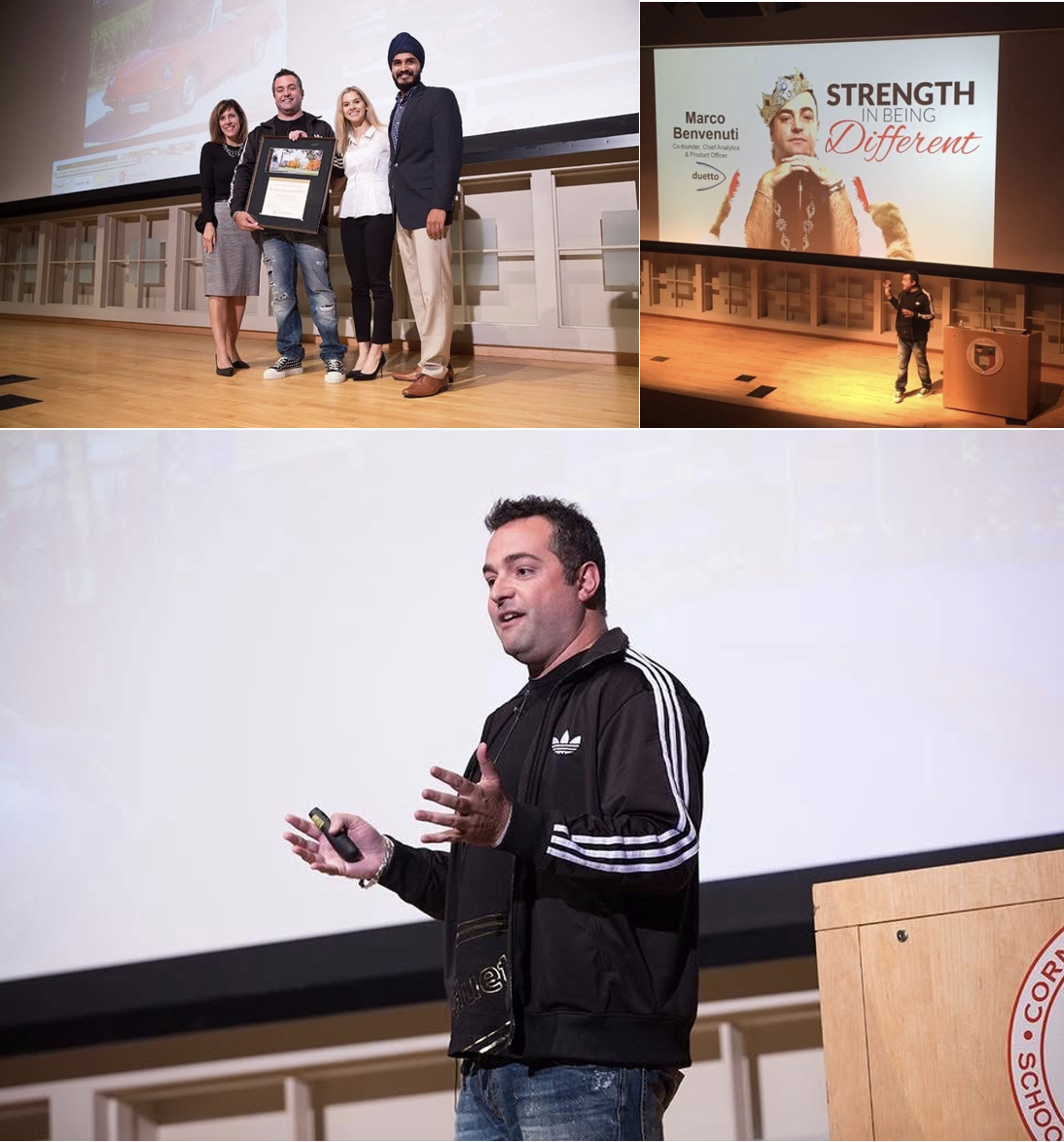
Marco at Cornell Hotel School Dean’s Distinguished Lecture Series.
He gave his talents.
He gave his resources.
And, perhaps most importantly, he gave people permission to think differently.
Marco believed there was strength in being different. “That’s (being different) is where the genius happens,” he said. “That’s where the innovation happens.”
He lived those words.
He refused to tone himself down. He embraced his eccentricities, his passions, his curiosity, and his unconventional way of looking at the world. He moved comfortably between business and sports, technology and theater, Italy and America, the boardroom, and the basketball court.
He was fiercely loyal, endlessly creative, exceptionally intelligent, and often delightfully unpredictable.
But underneath the red poncho, the Alfa Romeo, the Star Wars memorabilia, the stuffed animals, the gold hockey medallion, and all the showmanship was a person who cared deeply about people and possibilities.
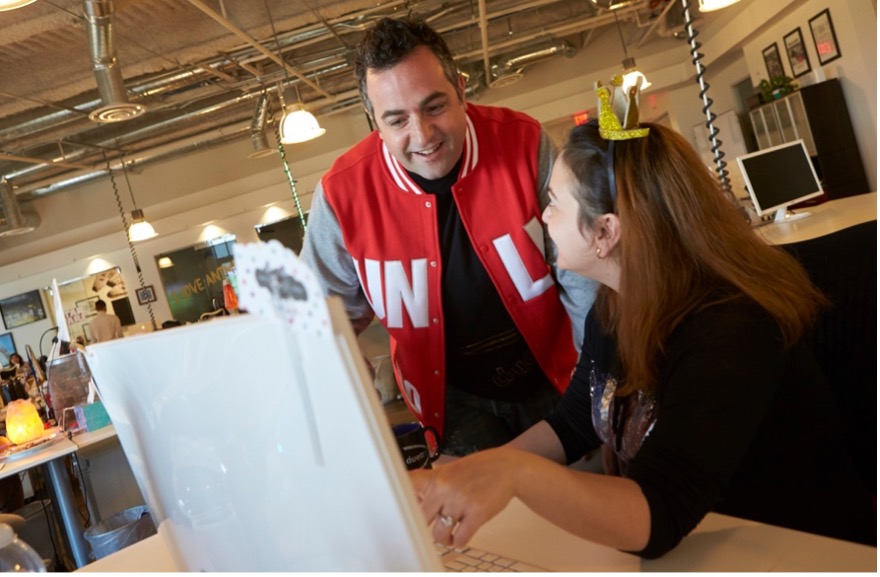
He believed that dreams are not achieved by waiting for permission.
They are achieved by pursuing them.
By working.
By learning.
By finding the right people.
By trusting the data.
By staying curious.
By refusing to be discouraged by the opinions of others.
And, when necessary, by fighting like hell for what you believe.
That may be the most enduring message Marco leaves behind.
When you embrace your life’s passions without compromise, think differently, remain curious, and help others do the same, your dreams really can come true.
Marco’s own life was proof.
Written by Marian Alper, Angela Ramsey, and Stowe Shoemaker from UNLV