
Curt Strand ‘43
The Story
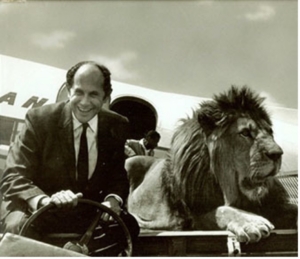 Curt Strand, retired chairman and CEO of Hilton International was one of the most successful and influential CEO’s in lodging in modern history.
Born 1920 in Vienna, Strand and his family fled Austria and settled in the United States in 1937.
“My father had the idea that I should get some American experience and coincidentally at that time as I went out to go to the U.S., Adolf Hitler came into Austria. So we went across and that was also a good thing. But I really came here to do some work, which I did. I first moved to Minnesota because my father had connections there and I was sent to work at Hormel’s packinghouse, and they had a course for young people who were recent college graduates, which I was not a college graduate yet, but we worked various departments in the packing house which isn’t much fun. I was about 17.” I was there two years and I really didn’t want to make this my career.
I talked to a friend who happened to be a teacher there and he said what do you want to do? I said well, ever since I was 12 I’ve wanted to be in the hotel business, I had good reasons for that. And he said well, if you want to be in the hotel business you should go to Cornell (University). And I said well, how do I get there? I didn’t have any money for a bus or a train. And he said write them a letter, so I wrote them a letter, but I was conscious at the time of a very uncomfortable fact which was that they would only accept 1 out of 10 applicants. And I wrote them a letter, I didn’t even have an interview but to my enormous surprise they accepted me on the basis of that letter. That was my first very happy happening in my life.
So I went there and I loved it, I held onto jobs so I could afford to pay the tuition, which at the time was very low, and I stayed there until it was time to go into service in the middle of WWII. At the time the service really needed people who could deal in languages, not only English, and I was one of these people (he said he speaks English, German, French and Spanish). So they put me in the military intelligence service, which was great and it was elevating and I really enjoyed that. So that’s how I spent my time in the service, first in England and then France and then in Germany.
When I got out of the Army I made an application for a job and only one, there was only one place I wanted to work and that was The Plaza in New York. I made no other applications. Finally, after a month they called me for an interview, and they gave me a job in The Plaza.
Well, if you analyze it, particularly in a country where I was a kid that heavily depended on foreign guests, it was a way to provide some service and not to be boastful about it, but it was an inspiration for me because you had to turn your mind to what other people, the way your guests, were thinking. So your primary devotion had to be to what you can call guests, who were other people. What I learned was that it was very important to think of your guests as the people who really make your career, so you have to really try to see the business and the world through their eyes. That’s what I enjoyed.”
Unbeknownst to Strand at the time, the Plaza was owned by hotelier Conrad Hilton, a connection that would prove fruitful in the future. Strand rose quickly through the Plaza’s ranks and caught the eye of J.B. Herndon, Conrad Hilton’s right-hand man and confidant. Herndon moved to have Strand work directly for him, and Strand recalled it was like having his own tutor. Under Herndon’s guidance, Strand wrote a series of articles for an entire issue of Hotel Management on the Hilton development program. He essentially explained the DNA of Hilton’s operations.
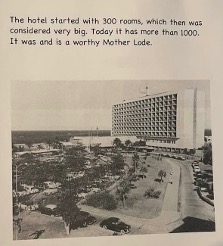
Caribe Hilton, San Juan, Puerto Rico
In 1953, he moved over to the fledging Hilton International division. By this time, Hilton had one international hotel, The Caribe in Puerto Rico, one in Spain opening that year, and a handful of other properties in various stages of planning. Strand soon started traveling the world, finding locations for future Hilton hotels. The key was finding local investors who would build a property to Hilton specifications, but with minimum upfront cost to Hilton. Then Hilton would operate the hotel, sharing in the profits, under what today we call a management contract. Back then, this model was almost revolutionary in hotel operations. Strand wrote copious letters and memorandums, often many pages long, to Conrad Hilton detailing his meetings from different locales. Strand’s writings also represent a window into the world of international travel and business during the Cold War years of the 1950s and 1960s.
From 1958 to 1960, Strand served as the opening GM of the Berlin Hilton. He knew he needed to experience what a general manager position entails, especially when the hotel is in the process of opening its doors. He recalled in an interview that his leadership of the Berlin property was unique because of the demands of opening a new hotel in a city that was still recovering from the devastation of World War II.
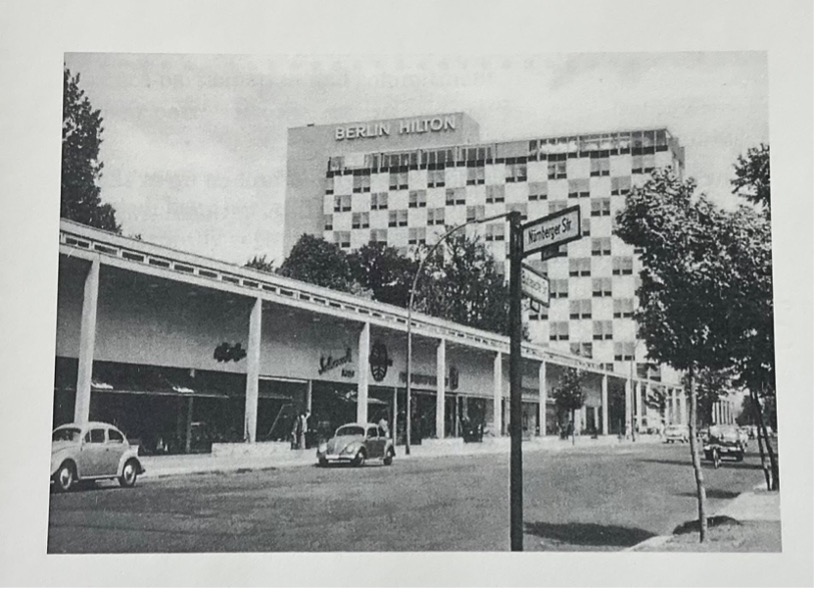
The Berlin Hilton
In 1960, he moved back to Hilton’s international division. Within a few years, he became the de facto president. In 1965, Conrad Hilton decided to spin off the international division of Hilton into a separate company, and Strand was named the president of the new company, Hilton International. Just two years later, Trans World Airlines (TWA)—a major American airline that operated from 1930 until 2001—bought Hilton International. TWA wisely left Strand in place, realizing the profits from the company helped the airline’s bottom line. For the next 20 years, Strand served as president of Hilton International, growing the company around the world. When he stepped down in 1987, Hilton International had more than 100 properties worldwide in 60 different countries.
“What I enjoyed most about that experience was the pioneering aspects of it. Anybody can build a hotel in Paris. We did — when there hadn’t been a hotel built in Paris in 40 years because the Depression in the ’30s had turned off the money. But that was not as satisfying an experience as to do the same thing in, let’s say, Addis Ababa, where not a single retail shop existed and you had to try to create something so people would have an experience similar to what they might have in Paris.
That was much more of a challenge, and I enjoyed that particularly — the pioneering aspect, to be able to do something in a place where nobody had done it yet.
We went into a lot of places that had never had any hotel at all, let alone a five-star or four-star hotel. It’s a more thrilling experience than doing it in well-established capitals like London or Paris, or even in Berlin.
We built a hotel in Berlin when Berlin was still practically destroyed after the war. There was only one hotel there, in West Berlin, with 100 rooms. And we opened our hotel the same day (former Soviet Union Premier Nikita) Khrushchev gave West Berlin the ultimatum to give up as a separate political unit and join East Germany. That was kind of fun.
Perfect Timing, and More
As often happens in life, it’s a question of being in the right place at the right time. We started [Hilton International] when the door was wide open. The war had ended just a few years before, and nobody could afford to travel except Americans. So we built our first hotels where Americans wanted to go, in Madrid, or in Istanbul.
We were there at the right time. We started our company at a time when our founder, Conrad Hilton — who was really not a hotel man; he was really a banker — had an intuition that we needed to expand abroad now that the war was over. Let me tell you a little story about him, because it was basic to what we finally did.
In 1946 or ’47 he got a letter from the Puerto Rican tourism development agency and it said, ‘Would you people like to do a hotel here? We would build it, and you would lease it.’ And he answered these people in Spanish. Now, take yourself back to 1946 or ’47. At the time Puerto Rico was a colony; it wasn’t called a colony, but it was a colony. To have the intuition to answer a letter from a government authority from a colony, a letter that was written in English, to flatter them and answer it in Spanish took a lot of intuition, which taught me a lot of lessons.
And that’s how we started. We started with nothing. The board gave us $300,000 to be able to have a couple of people on the payroll. And that’s all we had, and we grew it, and I enjoyed the exercise of growing it.
Conrad Hilton gave us carte blanche, he was running the company in the U.S. and said you guys figure out how to do it abroad and he said if you’re going to do it abroad you have to learn how the people live, you have to be apart of the world, not part of an operation in a U.S. state. And we also had to have a little intuition such as we learned that 80 percent of all reservations were made by local people and what that meant was that you had to accommodate local taste, you had to work yourself into the local psyche and not depend on someone in Chicago who had business in Cairo to make his own reservation. It was someone in Cairo who made that reservation for him on which we depended. So we had to be on good terms with people in all of these various countries to be accepted and hopefully admired for what we were doing because we were creating businesses in those countries that at that time did not exist.
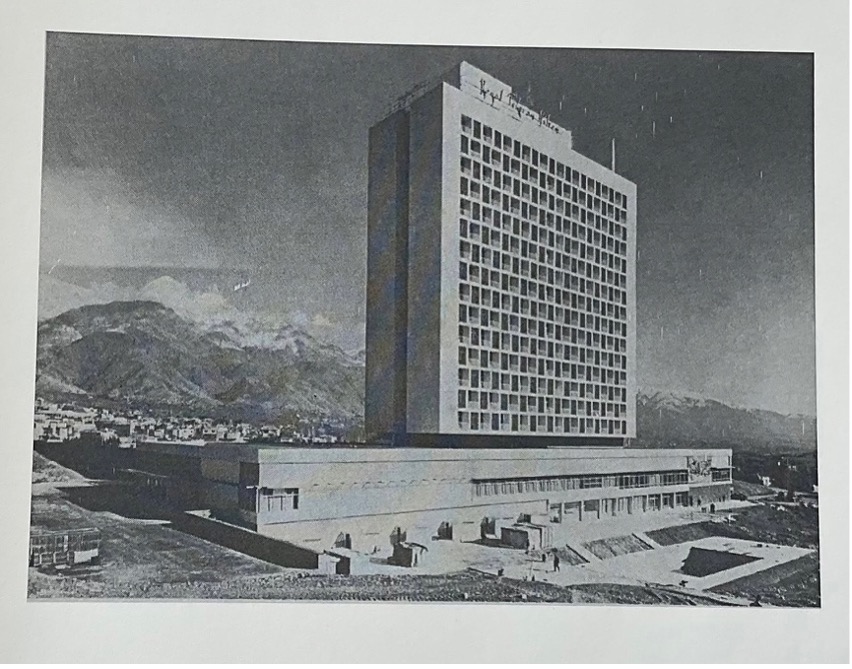
The Tehran Hilton
When we started there was no such thing as a management agreement. There was no such thing as a franchise. If you had to build a hotel, you either built it yourself or you had a developer build it and you leased it. You paid a fixed rent. After a few years we came to the conclusion that we couldn’t take on that much financial responsibility, so we came up with the concept of a management agreement. That’s all over the world today, but it didn’t exist when we started — where somebody else builds the hotel and you get paid for managing it.
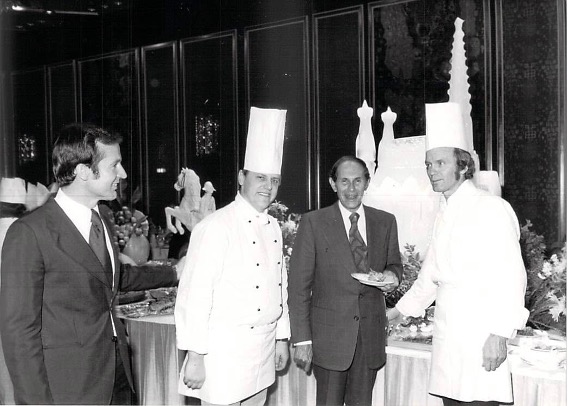
Opening of the Venna Hilton, 1975
My policy of hiring people was, don’t worry so much about their experience; you can train them to do the work. Hire people who are naturally friendly, smiling people, because you cannot train people to smile. This goes for all customer-related jobs. Whether it’s an airline or a hotel or some other part of the travel industry, hiring people in customer-related personal services based on their work experience is fine, but it won’t determine how great an experience the customer is going to have with these people.
These are intelligent people. They can get their heads together and say, ‘Okay, today we’re not talking about schedules. We’re not talking about new equipment. We’re going to talk about kindness and empathy in our business.”
Three of Strand’s most memorable projects took place in Madrid, Hong Kong, and Istanbul.
The Madrid property was Hilton International’s first hotel in Europe. It opened in 1953 on the Castellana, Madrid’s version of New York’s Park Avenue, just as Madrid was emerging from a three-year civil war. Conditions were less than ideal. In front of the hotel, donkey carts competed with 1928 Renault taxi cabs and ancient street cars. No foreign currency was available to import anything, and the origin of much of the equipment was in question. For example, the labels on the elevators suggested they had been made in Austria, but the Hilton team soon realized that the lifts had been pieced together in a local machine shop. Toilet paper had to be smuggled in across the straits of Gibraltar by Conrad Hilton’s brother Carl, who served as project manager. Carl Hilton had been a captain in the Navy, so it was assumed he could handle a rowboat at night. It took Hilton International at least twenty years to get its part of the profits–and its expenses–out of the country. As Strand put it, the company learned some valuable lessons, not the least of which was that a twenty-year lease without renewal options can be too short.
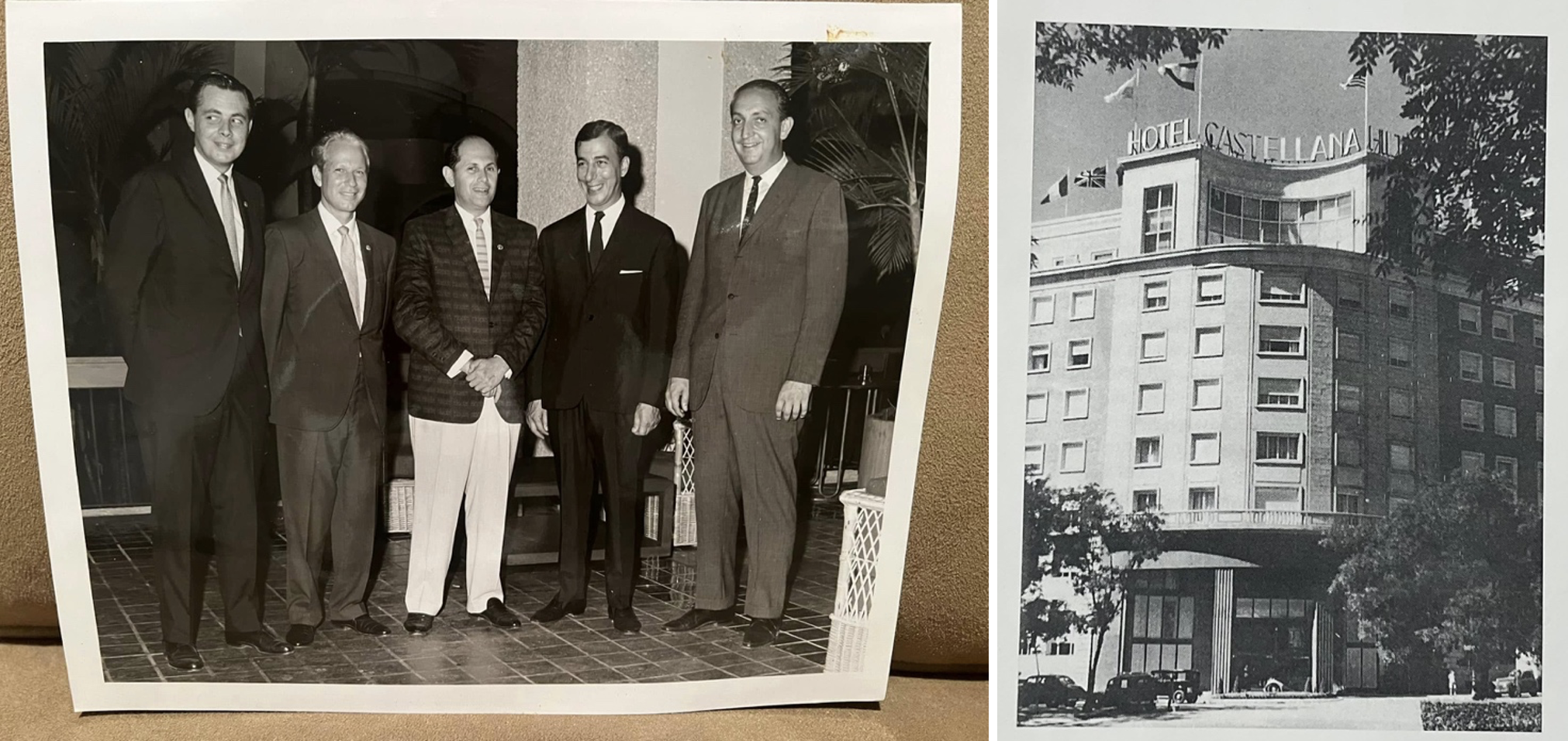
The Hilton Madrid, the first Hilton in Europe
In 1963, Strand traveled to Hong Kong to meet with a group of five brothers and sisters about managing a hotel they had recently bought. But Strand discovered that they really wanted to run the hotel as a family enterprise under the Hilton name, an arrangement of no interest to Hilton. As Strand walked toward the ferry that would begin his trip home, he saw a tall building under construction with a large Texas flag flying over its roof. Visiting the deserted site, Strand and his team realized it was a large hotel overlooking the harbor, marked by a construction sign bearing the name Leo Corrigan, Dallas, Texas.
Back in the United States, Strand contacted the general manager of the Dallas Hilton and asked him to arrange a meeting with Corrigan. Strand learned that the hotel was due to open in three months, but the manager Corrigan had hired had turned out to be of questionable character. Strand sent Corrigan a management lease, and a week later both parties agreed to the lease. The hotel made an operating profit with 21 percent occupancy the first year, thanks largely to Hong Kong’s low labor costs. Hilton International’s development costs for the hotel: $2.47, the cost of Strand’s phone call from New York to Dallas.
In Istanbul the Hilton property had its origins in, of all things, a football (soccer) match. After host Turkey had upset Sweden in an international match, the Swedes claimed they were beaten not by the Turks, but by the cockroaches that kept them awake for two nights in their Istanbul hotel.
When the Turks read these stories, they were outraged. Turkey’s minister of finance also happened to head the country’s football association, and under his lead the government decided to use its pension fund to build a hotel. Hilton was awarded the right to construct the hotel on the edge of a large downtown park overlooking the Bosphorus River.
Strand and his associates insisted that the hotel have a strong Turkish flavor in its interior spaces. The Hilton team restarted long-dormant Turkish crafts to create carpets, tiles, fabrics, and artwork. This became a template for future projects, especially in places rich in history, tradition, and culture.
When it opened in 1955, the Istanbul Hilton was the first modern hotel built in Europe, and the prototype for the post-war boom in hotel construction. At the grand opening, a thousand troops paraded in historic costumes and raced on beautiful horses in front of ancient palaces and mosques. The event brought Turkey to the attention of the West, created a tourist industry from scratch, and made the Hilton name synonymous with fine hotels.
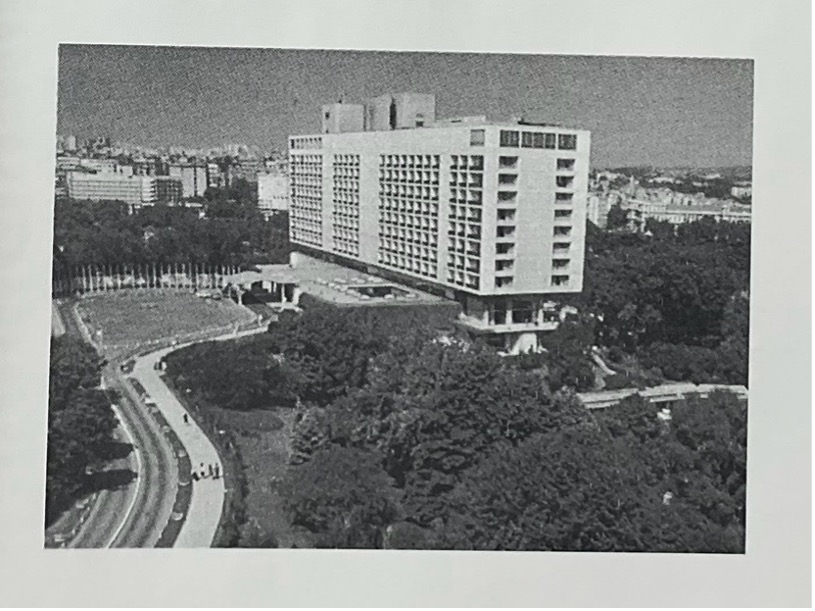
The Istanbul Hilton
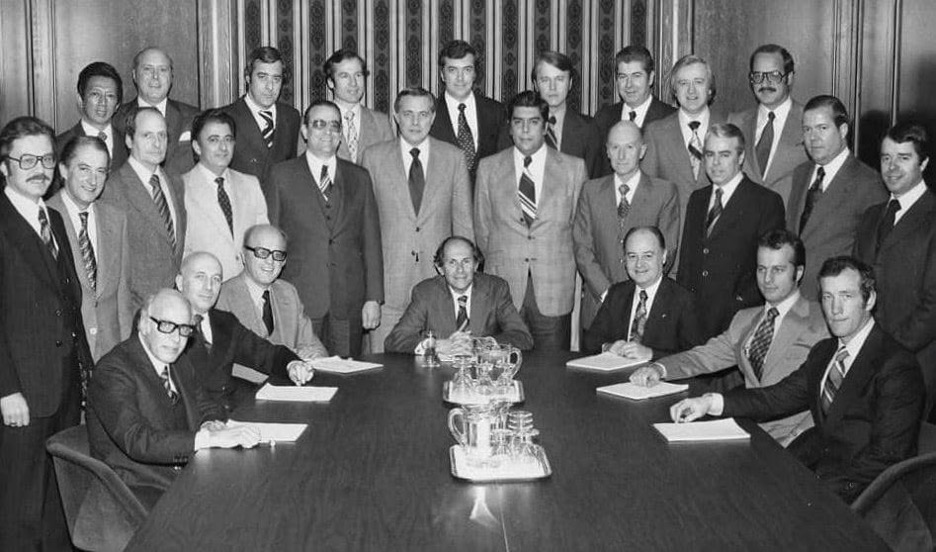
General Manager’s Workshop, Montreal, 1976
After retiring from Hilton Internation, Mr. Strand became a senior consultant for American Express, SAS Hotels, Tishman-Speyer, Pierre Hotel and Sherry Netherlands Hotel in New York City. He lectured at Cornell University, Cornell Essec (France), New York University, Y.P.O. and University of Houston. Some of the most important practices in the structuring of brand management for hotels were created by Mr. Strand. In a January 25, 1981 interview with The New York Times, he explained that Hilton International was essentially in the business of hotel management. He stated, “We are no longer basically a real estate company, but we control the standard of operation. We not only manage them but design the hotels carrying our name”.
In the New York Times interview, Mr. Strand, then age 60, revealed that he logged 300,000 miles a year, flying around the world to open new hotels, oversee construction and operations, and look into new opportunities. He shared, “I get off the plane with no jet lag, my stomach eager to enjoy all the varieties of food, and my mind eager to experience the local culture. I don’t know what jet lag feels like. I only need four or five hours of sleep. I knew I wanted a hotel career since I was 12 years old.” Mr. Strand was respected throughout the world, universally considered a singular important contributor to the lodging industry. In a letter dated May 14, 2009, J. Willard Marriott, Jr. wrote, “You must feel very good about the entire industry chasing management contracts- a philosophy that you created.”
At age 25, Mr. Strand met 17-year-old Fleur Lillian Emanuel at a dinner, and the two were engaged three weeks later. He remarked that she was the most intelligent, beautiful and sophisticated young woman he had ever met, and he knew he needed to move quickly, as Fleur was in New York only briefly enroute from South Africa to Edenborough to enter medical school. The two were married June 14, 1946 in New York. His wife went on to become a physiologist and pioneer of the “neuropeptide” concept and held the title of Caroll and Milton Petrie Professor of Biology and Professor of Neural Science at New York University, and President of The New York Academy of Science. They were happily married for 65 years until Mrs. Strand died in 2011. They were part-time residents of Snowmass Village since 1968, and full-time residents since 2004.
Curt Strand passed away at the age of 99 on July 11, 2020.

In 2021, Hubbard Hall Center for the Arts and Education in Cambridge, NY, established the Karen Strand Endowment. In the summer of 2020, longtime Hubbard Hall supporter and advisor Curt Strand passed away, leaving a large bequest to Hubbard Hall in his will, in honor of his late daughter and Hubbard Hall volunteer Karen Strand. Part of this bequest has allowed Hubbard Hall to retire the majority of its debt and replace its aging HVAC system and provided funding to restore and renovate the Lovejoy building into artist housing. The majority of the money will be held in a restricted investment fund, with the annual investment earnings supporting scholarships and fellowships at Hubbard Hall, in the name of Karen Strand, who died in 2006.
Hubbard Hall is a thriving arts center dedicated to cultivating, sustaining and promoting the cultural life of our rural community. Hubbard Hall gathers people from all walks of life to create, learn, and grow together, while developing, producing, and presenting world-class art and artists. We do this in order to enrich people’s lives – and the life of our community. We are an arts incubator, a training ground for artists of all ages and backgrounds, a magnet for artistic activity, a safe haven for risk-taking, an economic driver for our region, and the beating heart of our community. We are dedicated to cultivating, sustaining, and promoting the cultural life of our rural community. We are also committed to restoring and preserving Hubbard Hall and all of the buildings on our campus as community cultural assets.
Since 1878 Hubbard Hall has developed, produced, and presented theater, music, opera, dance, and the visual arts and in recent years has become a world-class development center for new work. Since 1977, Hubbard Hall’s current nonprofit has engaged thousands of artists, students, and audience members. As a training ground for both young and seasoned artists, Hubbard Hall continues to develop a new generation of artists and audiences while providing opportunities for individuals to take new risks and stretch beyond their comfort zone. Through classes in dance, theater, music, movement, visual arts, puppetry, creative writing, martial arts, yoga, and even gardening, Hubbard Hall gives students of all ages an opportunity to train, collaborate, and thrive.
Sources:
The Aspen Times, Obituary, Curt Strand July 14, 2020
https://www.aspentimes.com/obituaries/obituary-curt-strand/
Lodging Magazine, November 2, 2020, A Look Back: The Accomplishments of Curt Strand by Mark Young
https://lodgingmagazine.com/a-look-back-the-accomplishments-of-curt-strand/
Travel Weekly Magazine, January 29, 2013, Curt Strand: Insights from the Hospitality Industry’s Genteel Pioneer
https://www.travelweekly.com/Plus/Business-Leadership/Curt-Strand-Hilton-International-and-TWA
The Snowmass Sun Magazine, November 27, 2019, Village Voices: Local spotlight Q&A with Curt Strand, 99 by Maddie Vincent
https://www.aspentimes.com/snowmass/village-voices-a-qa-with-curt-strand-99/
Hospitality Goes Global, The Cornell Hotel School
https://thelobby.cornellhotelsociety.com/page/books
Hubbard Hall, The Karen Strand Endowment.
https://hubbardhall.org/about/the-karen-strand-endowment/
In June 1996, Curt Strand wrote an article for the Cornell Hotel and Restaurant Administration Quarterly magazine titled Lessons of a lifetime: the development of Hilton International which chronicled his leadership of the company.
Abstract:
Hilton International started operations in 1947 under the names the Stevens, the Palmer House and the Plaza. Its founder, Conrad Hilton, had visions of globalization despite fierce opposition from his board of directors as globalization was deemed a financial risk. However, due to demand, financing and Hilton’s entrepreneurial skills, the hotel’s first overseas venture in Puerto Rico was soon opened, largely aided by government financing. Thus, from eight people in the late 1940s, Hilton International has grown to 35,000 people globally.
Full article: